
Beneath the palmettos

Each spring, something magical starts happening beneath palmettos, behind backyard fences, in the wooded areas between neighborhoods and alongside the edges of golf courses and retention ponds.Fox kits are being born. Most people never realize they’re there until one suddenly appears near the road at dusk or pauses at the edge of a walking trail with oversized ears and cautious eyes.
This time of year many of us begin seeing foxes more often. Part of the reason why is seasonal. The kits are getting older now, leaving the den more often, wrestling with siblings, exploring, and learning how to exist in the world.
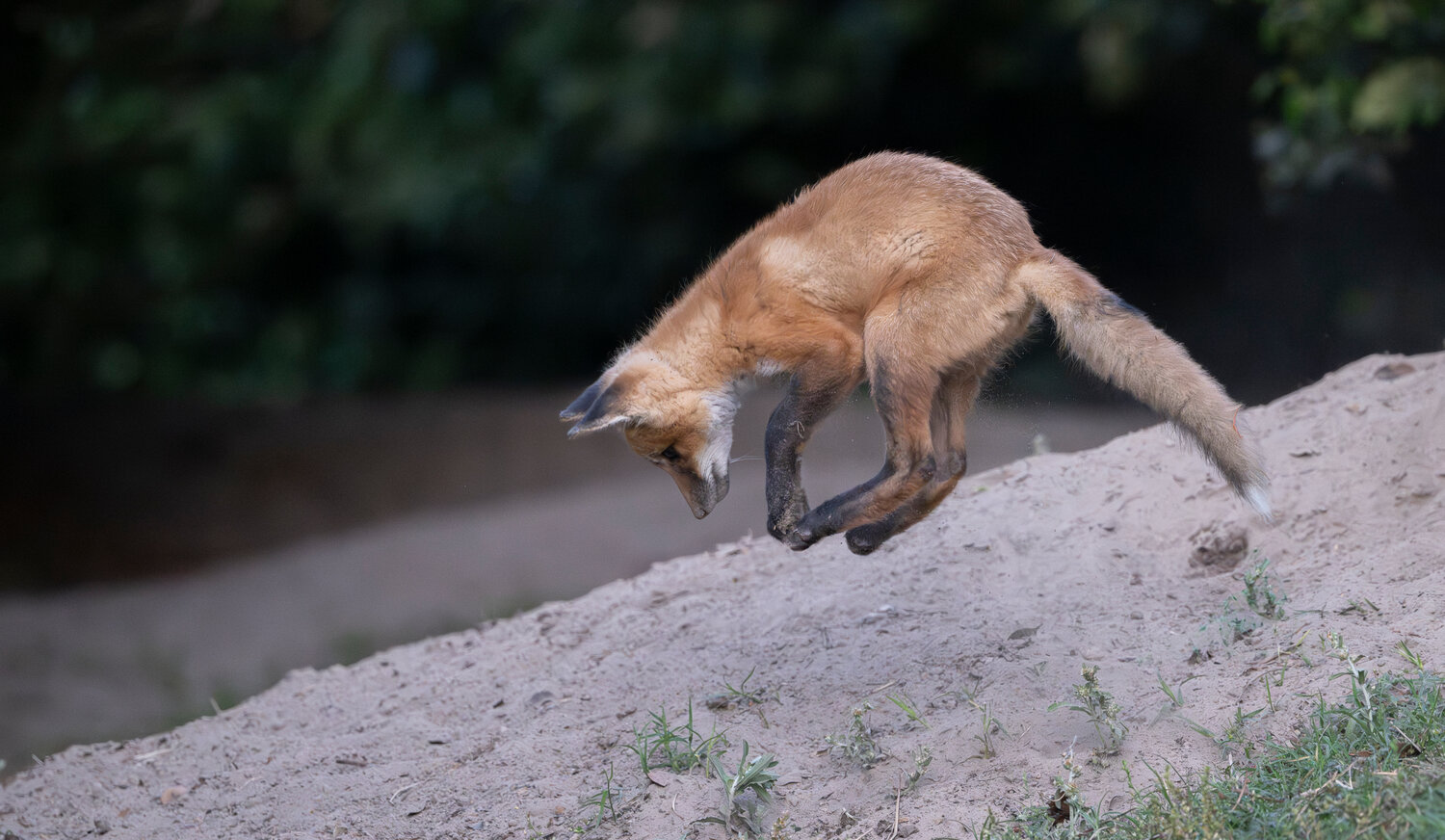
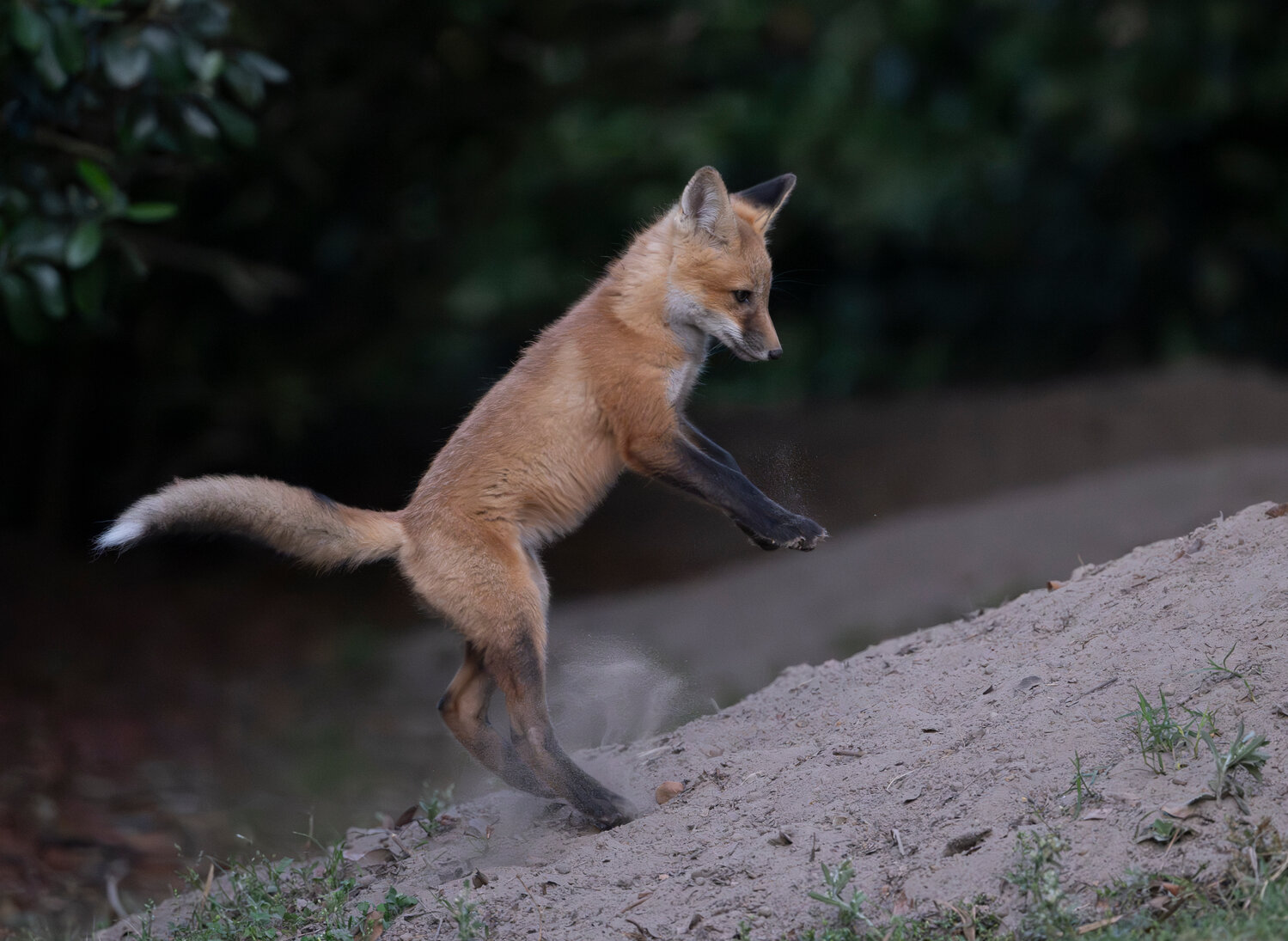
One of the more fascinating behaviors to watch in young foxes is something called “mousing,” a specialized hunting technique foxes are famous for. A fox will suddenly leap high into the air and dive downward nose-first onto its prey, using gravity and remarkable precision to stun small animals hidden beneath grass, leaves or brush.
Young kits begin practicing these skills early, long before they are actually successful hunters. What may look playful to us is often instinct taking over in real time. They pounce on insects, leaves, sticks, and each other while developing the coordination and timing they will eventually need to survive on their own. Foxes are known for their intelligence, patience, exceptional hearing, and almost cat-like agility, making them one of the most efficient small predators in the wild.
Scientists believe foxes may even use the Earth’s magnetic field to help triangulate distance and location before striking, which helps explain their almost uncanny accuracy.
Sometimes people are concerned when seeing foxes during the daytime, believing that if a fox is out during the day it means rabies. This is not true in most cases, especially during this time of year.
A mother fox raising kits has to hunt constantly, and the kits themselves do not keep business hours. Daytime sightings during spring and early summer are often completely normal.
Like any wild animal, foxes should be respected. Never feed them or attempt to approach the kits, even if they appear alone. Mom is usually nearby, watching carefully from a distance. However, foxes are not the dangerous predators many people imagine them to be. In reality, they are shy, intelligent animals that generally want nothing to do with humans.
Foxes are beneficial to neighborhoods because they help control rodents, insects and other nuisance animals. They quietly play an important role in the balance of the ecosystem around us. And, right now, more than ever, they are simply trying to survive in a Lowcountry that is changing at lightning speed.
Another reason we’re seeing them more frequently is that we continue building on available land in the Lowcountry. The woods get smaller, the quiet places disappear, and wildlife adjusts the best it can.
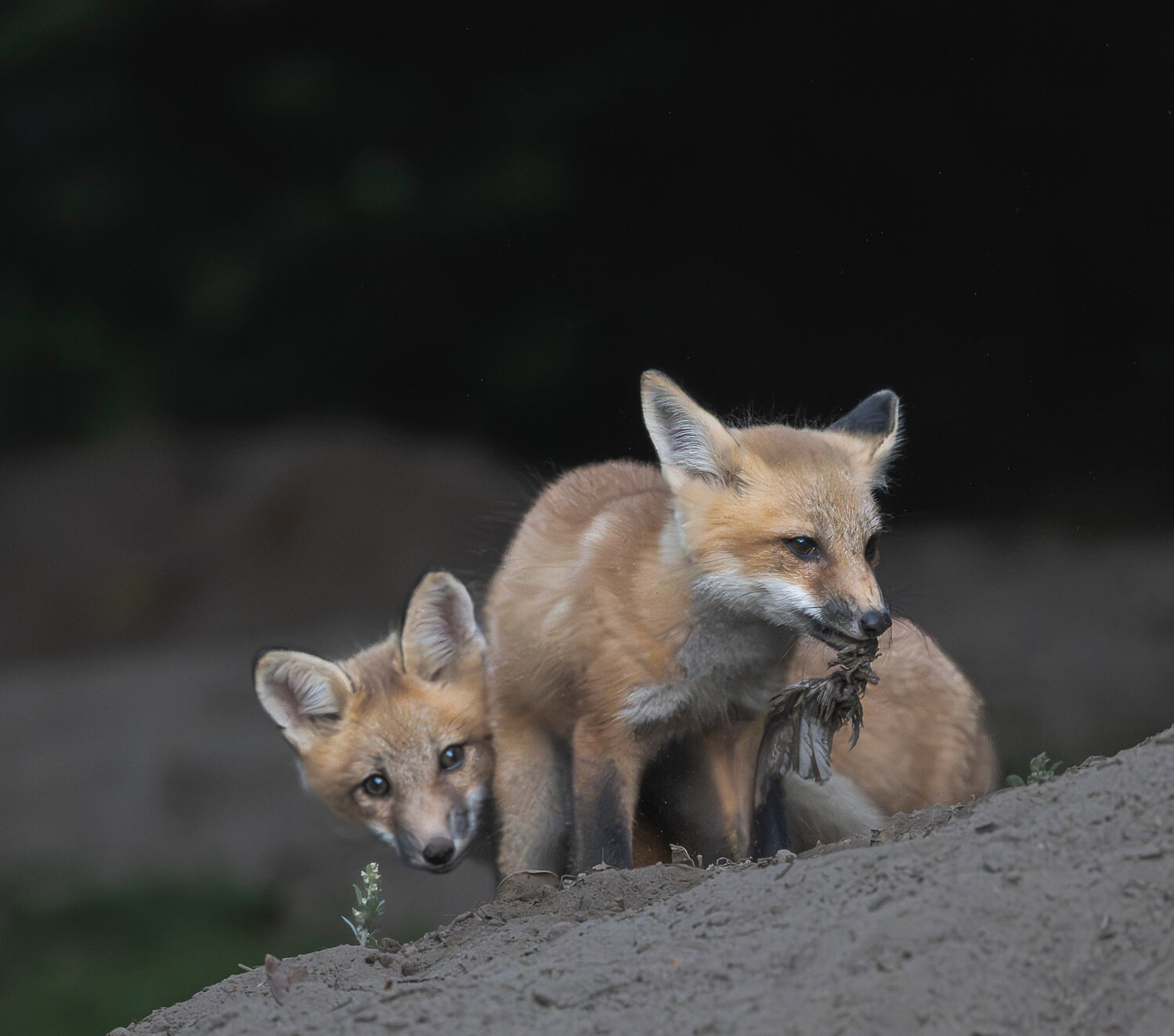
Areas that were wooded not that long ago are now apartments, storage facilities and tightly packed neighborhoods with names like “Preserve” or “Sanctuary,” ironically replacing the very thing they promise to honor. Wildlife doesn’t disappear simply because we build another subdivision. Animals adapt as best they can and continue trying to find safe places to raise their young.
That’s one of the reasons people are so drawn to foxes. They represent something wild in a place that is becoming increasingly polished and crowded. Part of what draws people to living here is the feeling that nature still has a voice through the marshes, birds, live oaks and wildlife.
Seeing these kits is a reminder that despite the endless clearing and development, nature is still trying very hard to hold on here. These little fox families continue finding pockets of safety wherever they can, adapting to an environment that changes almost daily around them.
If you see a fox standing near the the woods or tumbling with its siblings in the evening, stop and appreciate something beautiful and increasingly rare in our rapidly growing world: a little bit of wildness still hanging on in the Lowcountry.
Lucy Rosen is a Lowcountry-based writer, bird and nature photographer who spends far too much time chasing wildlife, watching birds and pulling her car over for “just one more photo.” Follow her work on Instagram @LucyGRosen or visit www.LucyGRosenPhotography.com.


