
From e-bikes to pathways, advocates seek a connected Lowcountry

For members of Lowcountry Bike/Walk Advocates, the debate over e-bikes and e-motos is part of a much larger conversation about how people get around the Lowcountry.
The organization advocates for walking and bicycling to be considered alongside cars when communities plan transportation. Its members push for sidewalks, multiuse paths and routes that connect neighborhoods and destinations, but much of their work happens far from the bike path itself.
They attend government meetings, serve on committees, support grant applications and proposed projects, and build relationships with local officials. Most recently, David Kimball and Ray Cipollini brought that perspective to a Southern Lowcountry Regional Board task force examining e-bikes.
The distinction between e-bikes and more powerful electric vehicles often called e-motos has become part of the local debate over what belongs on multiuse paths and how those paths can be shared safely. For the advocates, having a seat at that table is part of a broader goal: making sure bicyclists and pedestrians have a voice when transportation policies and projects are being developed.
That advocacy began several years before the current e-bike debate.
Kimball, a Sun City resident and one of the group’s founders, served from 2019 to 2021 on a Beaufort County task force developing the bicycle and pedestrian component of the county’s long-range comprehensive plan.
The resulting Beaufort County Connect plan identified bicycle routes and sidewalks that committee members believed should become part of the county’s transportation network. The plan was approved in 2021, Kimball said, but did not come with funding to build the projects.
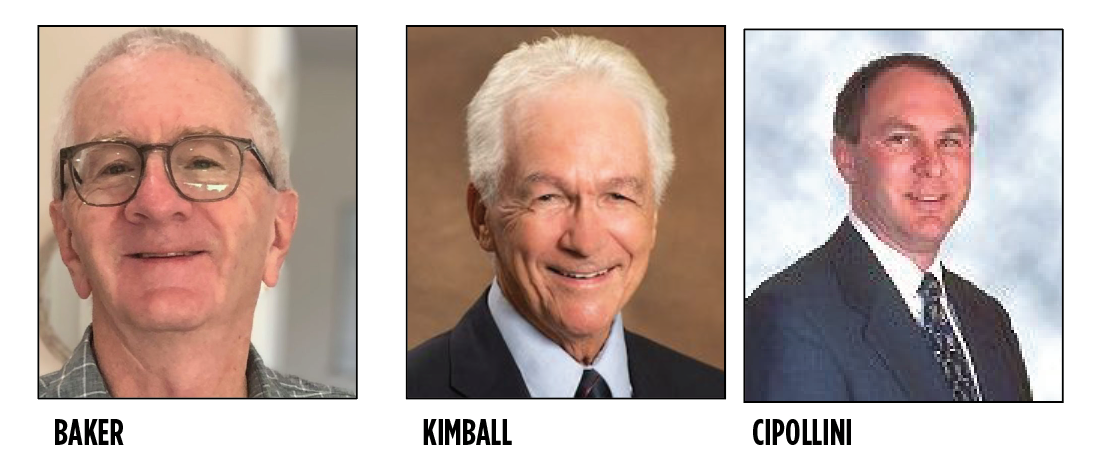
When he saw little progress afterward, Kimball began looking for others interested in advocating for the infrastructure. That effort brought him together with David Baker, Cipollini and Chuck Valentino, who joined him in founding what became Lowcountry Bike/Walk Advocates.
Cipollini, also a Sun City resident, brought experience from the New Jersey Bike & Walk Coalition and from serving as a local councilman in New Jersey. Valentino, a Bluffton resident, became connected with Kimball through bicycle advocacy efforts.
sThe organization eventually connected with the Community Foundation of the Lowcountry, which accepted it as a nonprofit operating under the foundation’s umbrella, Kimball said.
Since then, the advocates have worked to turn long-range plans into projects on the ground.
One of the group’s priorities is turning individual paths into a connected regional system. In Bluffton, members supported work on the New River Linear Trail and want to see another segment built from its current endpoint near Sun City toward S.C. 170.
Kimball said that extension, combined with proposed multiuse paths along S.C. 170 and S.C. 46, could eventually create a loop linking neighborhoods and existing trails. He describes a pathway along S.C. 170 as a potential “spine” for a larger network stretching north toward Beaufort.
The vision extends beyond the immediate area. The Spanish Moss Trail is part of the developing East Coast Greenway, a walking and bicycling route envisioned along the Eastern Seaboard, and the advocates would like to see more of the Lowcountry tied into it.
But creating a connected network also means finding ways across the Lowcountry’s waterways.
That has put bicycle and pedestrian access between the mainland and Hilton Head Island high on the group’s list of concerns.
Earlier plans for the Hilton Head bridge project included a separated bicycle and pedestrian path, according to the advocates, but that feature is not part of the current plan. Lowcountry Bike/Walk Advocates was among those pushing to preserve access for cyclists and pedestrians between the mainland and the island.
Kimball points to Charleston’s Arthur Ravenel Jr. Bridge as an example of what such infrastructure can become. The bridge includes a separated path for pedestrians and cyclists.
“Look what a beautiful asset that is,” Kimball said. “It’s busy all day long.”
The advocates have not entirely given up on a Hilton Head connection. Kimball said they believe there could still be an opportunity to accommodate cyclists and pedestrians if funding and design considerations allow it.
The challenges are different in other parts of the group’s service area.
While much of its work has centered on Beaufort County, Baker has focused on expanding its advocacy in Jasper County. A Margaritaville resident, Baker said some parts of the county lack even basic pedestrian infrastructure.
“For people that have lived in Jasper County for generations, people have very little opportunity even for safe places to walk, let alone even bicycle,” Baker said.
One of his focuses has been Hardeeville. Baker said some older development agreements did not require sidewalks or multiuse paths, leaving communities without that infrastructure as they were built.
He said he has worked with city officials to encourage those features in newer development agreements. He pointed to Carolina Station as one project where plans call for sidewalks within neighborhoods and multiuse paths along main streets.
For the advocates, getting those features into plans before construction can help avoid the challenge of trying to retrofit communities years later.
Baker also pointed to plans for a multiuse pathway along Argent Boulevard as a positive step, although he said its usefulness will ultimately depend on where people can go from it.
“You got a nice multiuse pathway with nothing at either end to go to or from,” Baker said. “So that’s a work in progress.”
Lowcountry Bike/Walk Advocates’ stated service area includes Beaufort, Jasper, Colleton and Hampton counties. Transportation projects can take years to plan, fund and build, and bicycle and pedestrian improvements compete with road projects and other priorities for public dollars.
For residents who want a voice in those decisions, the organization is looking for more people to become involved.
Those concerned about e-bikes and e-motos on local pathways, pedestrian safety or the availability of bicycle and walking routes can learn about current projects and participate in the group’s advocacy efforts. More information and ways to get involved are available at the website, LCBWA.org, or follow them on Facebook.
After several years of making their case, Kimball believes the advocates are gaining a stronger voice in regional transportation discussions.
“We’ve laid the groundwork,” he said, “and we’re working hard to encourage civic leadership to build more bicycle and pedestrian pathways that connect our communities.”


